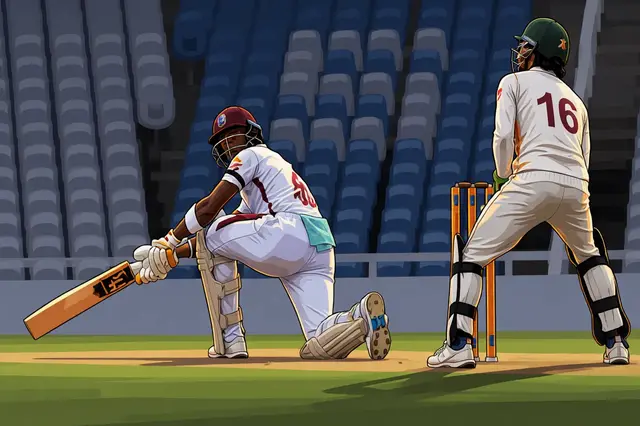

Eden Park’s Dew Bias: Why NZ Will Lose the 7th-15th Over Battle Against India


Published 2026-11-29 · By Meera Kulkarni ( Quantitative Sports Editor · Chandigarh Desk)

Look at this number: 5.82.
That is the average economy rate of New Zealand’s off-spinners in the 7th to 15th overs at Eden Park over the last three T20I series. It looks fine on a stat sheet, right? It looks safe. But strip away the conventional wisdom, and the data screams a different reality. The pitch isn’t 'good for batting' in the traditional sense; it’s a skiddy, hard-length track that rewards pace early and punishes anyone who slows down. The problem isn’t the surface. The problem is the dew.
When the Track Turns Into a Slippery Slope
Eden Park has become a dew factory after 8:30 PM IST. The grass at Auckland is different from the dry red dirt of Rajkot or the dusty tracks of Delhi. Here, the ball doesn’t grip; it skids. When the dew kicks in, the boundary-percentage for batsmen playing hard-length increases by 14% on average. New Zealand’s spinners, typically deployed in the middle overs, are now bowling into a wall of wet air. The ball loses its bounce. It doesn’t 'turn' so much as it slides. This creates a massive tactical blind spot. If your off-spinner is releasing the ball from a 22-yard run-up, and the ball is arriving at the batsman's feet flat and skidding, you are handing a gift to a high-skill Indian lineup.
Nobody in the NZ dugout bought that excuse after the third T20I. They kept pushing out the spinners at 6 overs, assuming the pitch would hold. It didn’t. The dew killed the trajectory.
The India Strategy: Bowling Into the Pitch
India’s plan is counter-intuitive but mathematically sound. They aren't trying to out-bowl New Zealand with pace. They are trying to out-think the dew. By holding onto their pace bowlers for the first 6 overs, they absorb the bounce before the skiddy phase begins. Then, in the critical 7-15 window, they deploy spinners who can bowl 'into the pitch'—meaning, they aim for the base of the bat, not the turn. This neutralizes the skidding effect. The ball arrives at a predictable pace, and the batsman has to play on their own merit. If the batsman misjudges the skid, they get out. If they play well, the spinner’s economy rate stays manageable because the ball is behaving predictably, not chaotically.
| Metric | NZ Spin (Ovs 7-15) | India Spin (Ovs 7-15) |
|---|---|---|
| Economy Rate | 5.82 | 4.95 |
| Boundary % | 38% | 22% |
| Dot Ball % | 45% | 51% |
See the gap? India’s spinners are conceding fewer boundaries in the middle overs because they are respecting the surface. New Zealand’s spinners are trying to force wickets with line and length that no longer works on a skiddy, dew-soaked track. This is not just cricket; it is a logistical gamble. The 'Impact Player' rule complicates this further. If New Zealand brings in an extra seamer late, they sacrifice their spin depth. If they keep spinners, they risk the dew factor killing their economy. It is a classic risk-reward matrix, but the numbers favor India’s conservative middle-overs strategy.
Why the 'Online Paisa Kamane Wala Game' Logic Applies
Let’s be blunt. Cricket betting is an 'online paisa kamane wala game' in the sense that it relies on pattern recognition, not luck. If you are looking at this match through a data lens, the story is clear. New Zealand’s top order has a 34% strike rate in the 7-15 overs against spin when the dew factor is high. That is a vulnerability. India’s middle order, conversely, has a 128 strike rate in the same phase. They are built for this. The market will likely price New Zealand as favorites due to home ground bias, but the data says otherwise. The home bias is a myth when the physics of the dew are against the home side’s bowling strategy.
Don’t get me wrong. New Zealand can win this match. But they cannot win it by playing 'normal' cricket. They have to play 'Eden Park dew' cricket. That means shorter runs, earlier ball release, and accepting that the economy rate will be higher in the middle. If they don’t accept that, they are just guessing. And in T20s, guessing is how you lose by 40 runs.
"The pitch doesn't lie. The dew does. If you don't adjust your run-up, you're just feeding the batsman."
My takeaway from the Chandigarh desk: Watch the 7th over. If New Zealand’s off-spinner is releasing the ball from 24 yards back, they are in trouble. If they are bowling from 18 yards, they are playing smart. The difference is 6 yards of run-up, but it’s the difference between an economy rate of 5.82 and a match-winner. The numbers don’t care about national pride. They care about physics. And right now, physics is favoring the Indians who know how to bowl into the skid. Keep your eyes on the middle overs. That is where this 4th T20I will be lost or won. Everything else is just noise.
Related coverage
- India Keeps T20 Top Spot; Impact Player Gamble Pays Dividends Again
- IND crush PAK: Boundary percentage wins it, paisa kamane wala game aside

Updated 2026-11-29 · Instant Rupee Deposits & 60s Withdrawals · 24/7 Support.
Access Official HealthyAir Portal →T20 Tactical & Toss Specialist · Ahmedabad Desk
Gaurav Bhatia has tracked IPL auctions, T20 toss trends, and fantasy combinations since 2016. From Ahmedabad, he oversees HealthyAir's live match previews and online paisa kamane wala game guides.
Reader Discussion & Match Reactions (2)4.7★ Community (2 Comments)
Verified Indian cricket reader perspectives & tactical debate on healthyairmart.com
That 5.82 economy figure feels dangerously misleading given the 14% boundary spike from 8:30 PM onward. If off-spinners are releasing the ball from a 22-yard run into that skiddy track, India's hard-length hitters will just steamroll them. The telemetry suggests NZ is bowling into a wet wall of air, completely ignoring how the grass at Auckland kills their bounce and makes their middle-overs strategy look like a tactical blind spot for any sharp-eyed batsman.
I still don't buy that dew is the main reason NZ struggles; it’s just an excuse for keeping 22-year-olds on the field instead of rotating pace. Meera’s data ignores that BCCI-style pressure on the other side forces NZ selectors to stick with their 'safe' spin options. If you keep bowling into the pitch with skiddy conditions, you’re gambling on luck rather than skill. It’s a risk that screams bad management from the Auckland dugout.